Handbag Import Duty & Tariff Guide by Country: US, EU, UK, AU, CA (2026)
Published August 4, 2026 · By Jinman Bags Team
Import duty can add 5% to 25% — or more — to your landed handbag cost, depending on where you ship and how you classify your product. For B2B buyers sourcing from China, understanding the tariff landscape is not optional; it is the difference between a profitable import program and a margin-eroding surprise at customs. This guide breaks down the HS code classification system, current duty rates across the five major import markets, free trade agreement (FTA) savings, and proven strategies to legally minimize your tariff burden in 2026.
Understanding HS Codes for Handbags
All handbags are classified under Chapter 42 of the Harmonized System (HS), specifically heading 4202. Within this heading, the subheading you fall under depends on the outer surface material — and this single classification determines your duty rate. Get it wrong, and you may overpay by thousands or face customs penalties.
- HS 4202.21: Trunks, suitcases, and vanity cases with an outer surface of leather or composition leather — includes hard-shell luggage
- HS 4202.22: Handbags with an outer surface of leather, composition leather, or patent leather — this is the primary classification for leather handbags
- HS 4202.29: Handbags with an outer surface of other materials — textile, plastic sheeting, vulcanized fiber, paperboard, or other materials. Most PU leather and fabric bags fall here.
- HS 4202.31: Handbags with an outer surface of plastic sheeting — sometimes used separately for PVC/PU bags depending on country-specific classification
- HS 4202.32: Handbags with an outer surface of textile materials — cotton, nylon, polyester, canvas bags
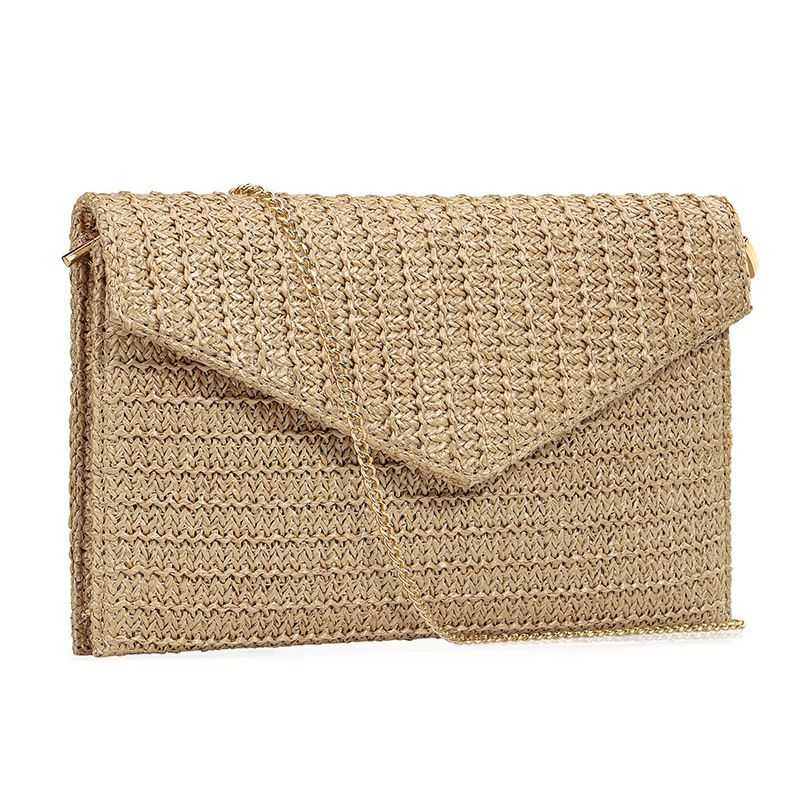
- HS 4202.39: Handbags with an outer surface of other materials — straw, raffia, jute, wood
The critical insight: a bag's outer surface material determines its HS subheading, and different subheading carry different duty rates — sometimes a 10+ percentage point difference. A handbag with a leather outer surface (4202.22) may carry a different rate than the same bag made with a PU outer surface (4202.29 or 4202.32). This is why material specification at the manufacturing stage directly impacts your import cost.
United States: Handbag Import Duties (2026)
The United States is the world's largest handbag import market, and its tariff structure is one of the most complex due to Section 301 tariffs on Chinese goods. Here is the current landscape:
- Leather handbags (4202.22.10): MFN/NTR duty rate of 8% — the standard Most Favored Nation rate applied to WTO members
- Reptile leather handbags (4202.22.15): Reduced rate of 5.3%
- Plastic/PU handbags (4202.31): Duty rate of 5.3% — lower than leather
- Textile handbags (4202.32): Duty rate ranges from 5.3% to 17.6% depending on fiber composition (cotton bags typically higher, nylon/polyester lower)
- Straw/fiber handbags (4202.39): Duty rate of 5.3%
Section 301 Tariffs on China-Origin Handbags
In addition to the base MFN rate, handbags imported from China are subject to Section 301 additional tariffs. As of 2026, the majority of handbag categories under HS 4202 remain on List 3 or List 4A, carrying an additional 7.5% to 25% on top of the base rate. This means:
- Leather handbag from China (4202.22): Base 8% + Section 301 = effective rate of 15.5% to 33%
- PU/plastic handbag from China (4202.31): Base 5.3% + Section 301 = effective rate of 12.8% to 30.3%
- Textile handbag from China (4202.32): Base 5.3-17.6% + Section 301 = effective rate of 12.8% to 42.6% for the highest-tariff cotton bags
Important: Section 301 rates have been adjusted multiple times. Some categories were reduced from 25% to 7.5% during trade truces, then reinstated. Always verify the current rate on the USTR website or with your customs broker before finalizing your landed cost calculation.
De Minimis Exemption: The $800 Threshold
The US maintains a de minimis threshold of $800, meaning shipments valued at $800 or below enter duty-free and with minimal documentation. For small-sample orders or micro-batch buyers, this is a legitimate cost-saving channel. However, the de minimis exemption cannot be used to split a large commercial shipment into sub-$800 parcels — this is considered "structured avoidance" and US Customs (CBP) actively penalizes the practice.
European Union: Handbag Import Duties (2026)
The EU applies a common external tariff (CCT) across all 27 member states, published in the TARIC database. Duty rates for handbags under Chapter 4202 are:
- Leather handbags (4202.21/4202.22): Duty rate of 3% to 5% — leather suitcases and trunks at 3%, leather handbags at approximately 4%
- Plastic/PU handbags (4202.31): Duty rate of approximately 5.9%
- Textile handbags (4202.32): Duty rate of 3.7% to 9.7% depending on fiber type — cotton bags at the higher end, synthetic fiber bags at the lower end
- Other material handbags (4202.39): Duty rate of approximately 2.7% to 5.9% for straw, paperboard, and other materials
Beyond duties, all imports into the EU are subject to VAT (ranging from 17% in Luxembourg to 27% in Hungary) calculated on the CIF value plus duty. VAT is recoverable for VAT-registered businesses, but the cash-flow impact must be planned for.
GSP and FTA Savings for EU Importers
The EU's Generalized Scheme of Preferences (GSP) offers reduced or zero duties for eligible developing countries, but China graduated out of GSP eligibility in 2014. However, if you source handbag components or finished goods from GSP-eligible countries (e.g., Vietnam, Cambodia, Bangladesh), you can claim preferential rates. Additionally, the EU-Vietnam FTA (EVFTA), fully ratified, eliminates duties on most textile and leather goods from Vietnam over a phased schedule — making Vietnam-sourced bags increasingly competitive for EU buyers.
United Kingdom: UK Global Tariff (2026)
Post-Brexit, the UK operates under the UK Global Tariff (UKGT), which generally mirrors EU rates but with some simplifications. Handbag duty rates under UKGT:
- Leather handbags (4202.22): Duty rate of 4% — identical to the EU rate
- Plastic/PU handbags (4202.31): Duty rate of 5.9%
- Textile handbags (4202.32): Duty rate of 3.7% to 9.7% depending on fiber composition
- Other material handbags (4202.39): Duty rate of 2.7% to 5.9%
UK VAT is 20% (standard rate), applied to CIF + duty. For goods valued under £135, VAT is collected at point of sale rather than at import — relevant for small B2C sample orders.
UKCA Marking and Compliance
While UKCA (UK Conformity Assessed) marking is not currently required for handbags themselves (it applies to electronics, toys, PPE, etc.), any bags with electronic components — such as LED-lit bags, heated bags, or bags with built-in power banks — do require UKCA marking for the UK market and CE marking for the EU market. Ensure your factory provides the necessary compliance documentation if your product includes any electronic elements.
Australia: The FTA Advantage
Australia is the most tariff-favorable major market for Chinese handbag imports, thanks to the China-Australia Free Trade Agreement (ChAFTA), in force since 2015. Under ChAFTA:
- All handbag categories from China enter Australia at 0% duty — leather, PU, textile, and natural fiber bags alike
- The standard MFN rate (for non-FTA countries) is 5% for most handbag categories, but ChAFTA eliminates this entirely
- To claim the preferential rate, you need a Certificate of Origin (COO) or a Declaration of Origin from the exporter — your supplier must be registered under ChAFTA
- Australia applies GST of 10% on imports, calculated on the customs value plus duty and international transport
For Australian buyers, the total import cost on a $10,000 leather handbag order is just the 10% GST — no duty. This makes Australia one of the most cost-effective markets for direct-from-China sourcing. Always confirm your supplier can issue a valid ChAFTA Certificate of Origin; without it, you default to the 5% MFN rate.
Canada: MFN Rates and Trade Agreements
Canada does not have a free trade agreement with China, so Chinese-origin handbags enter Canada at the MFN duty rate. Canada's MFN rates for handbags under Chapter 4202:
- Leather handbags (4202.22): MFN duty rate of 8% — among the higher rates for leather bags globally
- Plastic/PU handbags (4202.31): MFN duty rate of 5%
- Textile handbags (4202.32): MFN duty rate ranging from 5% to 18% — cotton bags at the top of the range
- Other material handbags (4202.39): MFN duty rate of 5%
Canada applies GST of 5% plus provincial sales tax (varying by province, from 0% in Alberta to nearly 10% combined HST in Ontario and the Atlantic provinces). Canada's de minimis threshold is CAD $20 for duties and CAD $40 for taxes — significantly lower than the US, meaning even small commercial shipments incur duty and tax.
CETA and USMCA Implications
While Canada has no FTA with China, the Comprehensive Economic and Trade Agreement (CETA) with the EU and the USMCA with the US and Mexico offer preferential rates for goods originating in those regions. This is relevant if you have a multi-country sourcing strategy — for example, bags assembled or finished in a CETA-partner country may qualify for reduced Canadian duties. However, for direct China-to-Canada imports, MFN rates apply in full.
Tariff Optimization Strategies for 2026
Beyond simply knowing the rates, proactive buyers use several legal strategies to reduce their effective tariff burden. None of these involve evasion — they are standard trade compliance practices that experienced importers employ.
- Correct HS code classification: The most impactful strategy. If your bag has a textile lining but a PU outer surface, classify under 4202.31 (plastic) rather than 4202.32 (textile) — the duty difference can be 5+ percentage points. Work with a licensed customs broker to obtain a binding ruling from customs authorities for ambiguous classifications.
- Leverage FTAs with Certificate of Origin: For Australia, always request a ChAFTA COO from your supplier — it eliminates the 5% duty entirely. For EU buyers sourcing from Vietnam, claim EVFTA preferential rates. The paperwork takes minutes; the savings are significant.
- First Sale for Export valuation: Under US and EU customs law, you can declare the "first sale" value (the price the factory charged the middleman) rather than the price you paid, if a multi-tier transaction exists. This reduces the dutiable value — sometimes by 10% to 20%. Requires documentation of the supply chain and a qualified customs broker.
- DDP vs. DDU/DAP incoterms: Under DDP (Delivered Duty Paid), the supplier handles customs clearance and pays duties — convenient but gives you no control over classification or valuation. Under DAP/DDU, you or your broker handle clearance, giving you full control over HS code selection, valuation method, and FTA claims. For experienced importers, DAP with a trusted broker almost always yields lower landed costs.
- Material specification at production stage: Because duty rates differ by outer surface material, specifying a PU outer surface instead of leather can reduce US Section 301-exposed duty (PU: 5.3% base + 7.5% = 12.8% vs. leather: 8% base + 7.5% = 15.5%). For price-sensitive product lines, this is a legitimate design-for-tariff strategy.
- Duty drawback on re-exports: If you import bags and then re-export them (e.g., to a third-country distributor), you may be eligible for 99% refund of duties paid under US drawback programs and similar EU schemes. This is relevant for distributors with multi-country operations.
Landed Cost Calculation: A Practical Example
To illustrate the real-world impact, here is a landed cost comparison for a $15,000 order of 1,000 leather handbags (FOB $15/unit) from China to the US:
- Product cost (FOB): $15,000
- Ocean freight + insurance: $1,200
- US Customs value (CIF): $16,200
- Base duty (4202.22, 8%): $1,296
- Section 301 additional (7.5%): $1,215
- Total duty: $2,511 — a 15.5% effective tariff
- Merchandise Processing Fee (0.3464%): $56
- Total landed cost: ~$18,767 — or $18.77 per bag
Now compare to the same order shipped to Australia under ChAFTA: product cost $15,000 + freight $1,200 = CIF $16,200, duty $0, GST 10% on $16,200 = $1,620. Total landed cost: $17,820, or $17.82 per bag — nearly $1 less per unit than the US route, before considering that GST is recoverable for registered businesses.
Key Takeaways for B2B Buyers
- Know your HS subheading before you manufacture. The outer surface material determines your duty rate — design for it.
- The US is the most expensive major market for Chinese handbag imports due to Section 301 stacked on MFN rates.
- Australia is the cheapest — ChAFTA eliminates all duties on Chinese bags. Always claim the preference with a COO.
- EU and UK rates are moderate (3-9.7%) but VAT adds 17-27% cash-flow cost, even if recoverable.
- Canada's low de minimis ($20) means even sample orders incur duty — budget for it.
- Always use a licensed customs broker for first-time imports to a new market. The fee ($150-500 per shipment) pays for itself in classification optimization and FTA claims.